Know the technology · Treatment comfort
Does IPL hurt?
A warm sensation, a brief snap or very little sensation at all: light-based hair removal can feel different from person to person. Here is what affects comfort — and where cooling fits in.
Understand ice cooling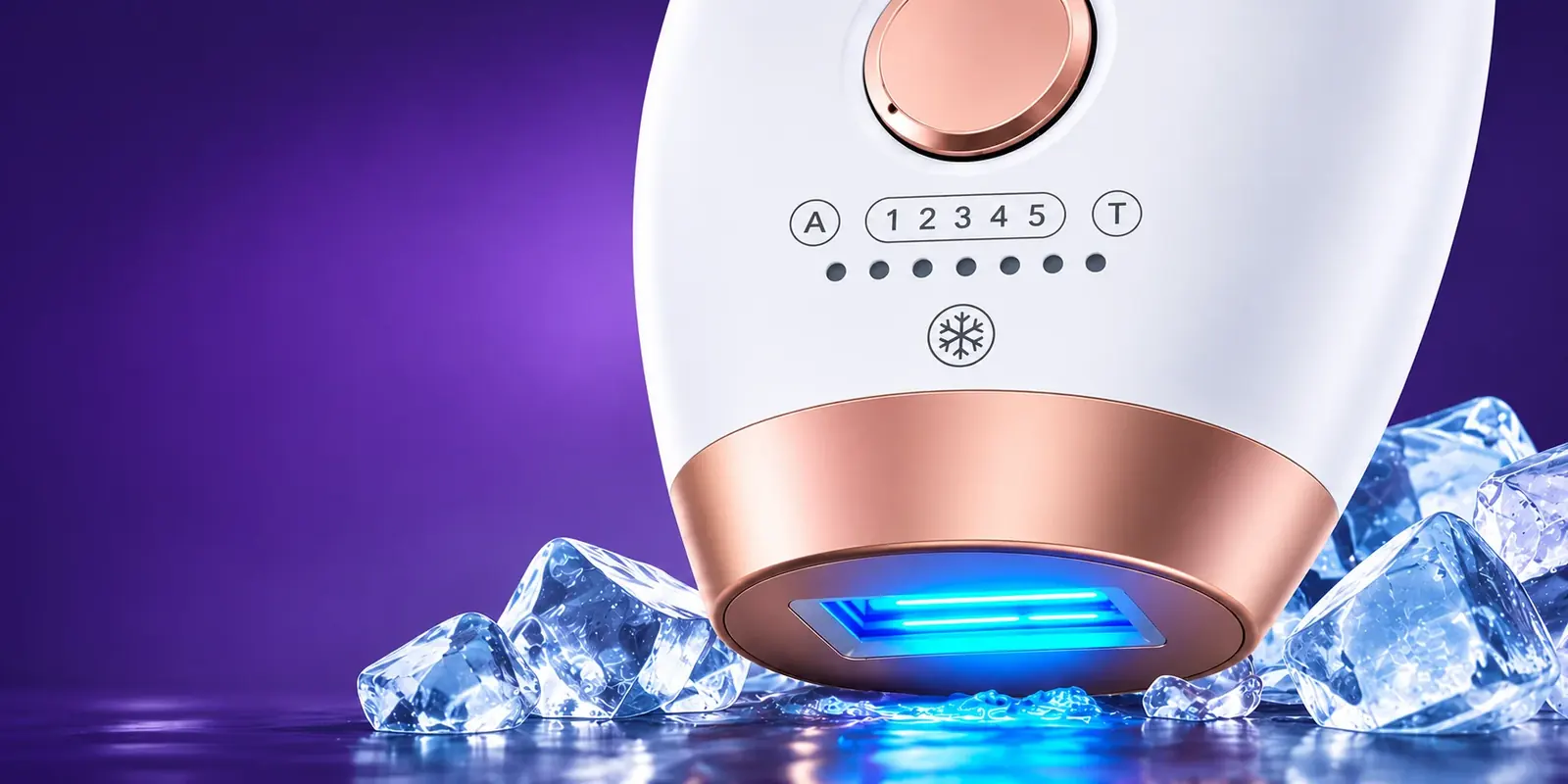
01 / Sensation
What does IPL feel like?
Intense pulsed light (IPL) delivers short flashes of filtered light. Energy absorbed by pigment in a hair can turn into heat. During light-based hair reduction, people may notice warmth, a quick flicking or snapping feeling, or mild temporary discomfort. Other users may experience very little sensation.
These descriptions are not a discomfort rating for CYPH/1. Skin response and perceived sensation vary with treatment area, equipment, settings and the individual. Discomfort alone is not a reliable sign of effectiveness, and stronger settings are not automatically better.
02 / Cooling technology
Why add cooling to IPL?
Light creates heat.
The principle of IPL hair reduction involves selective absorption of light and conversion into heat. This is why some warmth may be felt.
Cooling addresses the skin surface.
Contact cooling is used with some light-based treatments to support comfort at the skin surface. Cooling does not remove the need for correct settings and device-specific instructions.
Experiences still differ.
Cooling can help make a treatment more tolerable without promising that every flash, body area or intensity will feel the same.
What has research found?
A 2024 randomised split-face study of 60 patients receiving professional IPL for facial photoageing reported lower measured pain scores on the side that received thermal-shock cooling. This is evidence about that clinical cooling method and setting — not a test of CYPH/1 or its integrated cooling window.
A separate study comparing professional IPL and diode laser hair removal also measured treatment discomfort. Different professional systems cannot be assumed to predict the experience of a home-use device.
03 / What influences comfort
Why one session may feel different from another.
- Energy setting: use only settings appropriate for your skin and the manufacturer's instructions; a higher setting is not automatically more effective or suitable.
- Treatment area: skin sensitivity and hair characteristics vary across the body.
- Skin condition: recent tanning, irritation, sunburn and some medicines or skin conditions can affect suitability and risk.
- Device design: different home and clinic devices have different power levels, contact surfaces, cooling arrangements and contraindications.
Always check the specific product's instructions and suitability criteria rather than following a generic online setting or treatment schedule.
04 / The CYPH/1 approach
Always-on cooling, built into the routine.
The pre-launch CYPH/1 IPL device features a cooling treatment window that stays active during treatment; there is no separate cooling switch to activate. This is a product feature description, not a claim that treatment will be painless or that cooling has been clinically demonstrated to reduce discomfort with this particular device.
Product suitability, permitted areas, energy levels, patch testing and the treatment routine must follow the final K-803 user instructions. We are not assigning a numerical cooling temperature or a universal treatment schedule in this guide.
05 / Safety first
Comfort is not the same as safety.
Even with cooling, light-based hair reduction can cause burns, pigment changes or eye injury if equipment is unsuitable or incorrectly used. A cool feeling does not mean excessive light exposure is impossible.
Follow all manufacturer contraindications and patch-test and eye-safety instructions. Do not use IPL on prohibited areas, irritated or sunburned skin, tattoos or other excluded sites. If a reaction occurs, stop and seek appropriate medical advice.
06 / Common questions
Answers before you begin.
Is IPL supposed to feel hot?
Some warmth or a quick snapping sensation can occur. Unusually intense pain, burning or a concerning skin reaction is not a cue to continue: stop using the device and follow its safety guidance.
Does cooling make IPL painless?
Not necessarily. Cooling can support comfort, but different people and treatment conditions produce different sensations. A universal painless claim would need device-specific substantiation.
Can I increase the IPL setting if it feels comfortable?
Do not use comfort as the only guide. Follow the device's energy-setting and skin-compatibility instructions, even if the treatment feels mild.
Can everyone use a home IPL device?
No. Skin tone, natural hair colour, health factors and contraindications matter. Check the CYPH/1 compatibility guide and the complete device instructions.
07 / Keep learning
Understand the treatment choices.
08 / References
Evidence and further reading.
The sources below concern general light-based technology, cooling and precautions. They do not verify a CYPH/1 device-specific comfort outcome.
- Journal of Cosmetic Dermatology (2024) — Randomised study of thermal-shock cooling during professional IPL for photoageing
- Lasers in Medical Science (2026) — Randomised study comparing professional IPL and diode laser hair removal
- ARPANSA — IPL and laser consumer safety advice
- Advertising Standards Authority — Hair-removal advertising claims
Cycle. Phase. One.
Comfort, considered.
Discover our at-home IPL approach and follow CYPH/1 towards launch. Early access is not a pre-order.
Explore CYPH/1